
2020. 9 Exhibitions / 2 galleries
Horizon Line/Base Line / James Boychuk-Hunter
March 14 - April 25
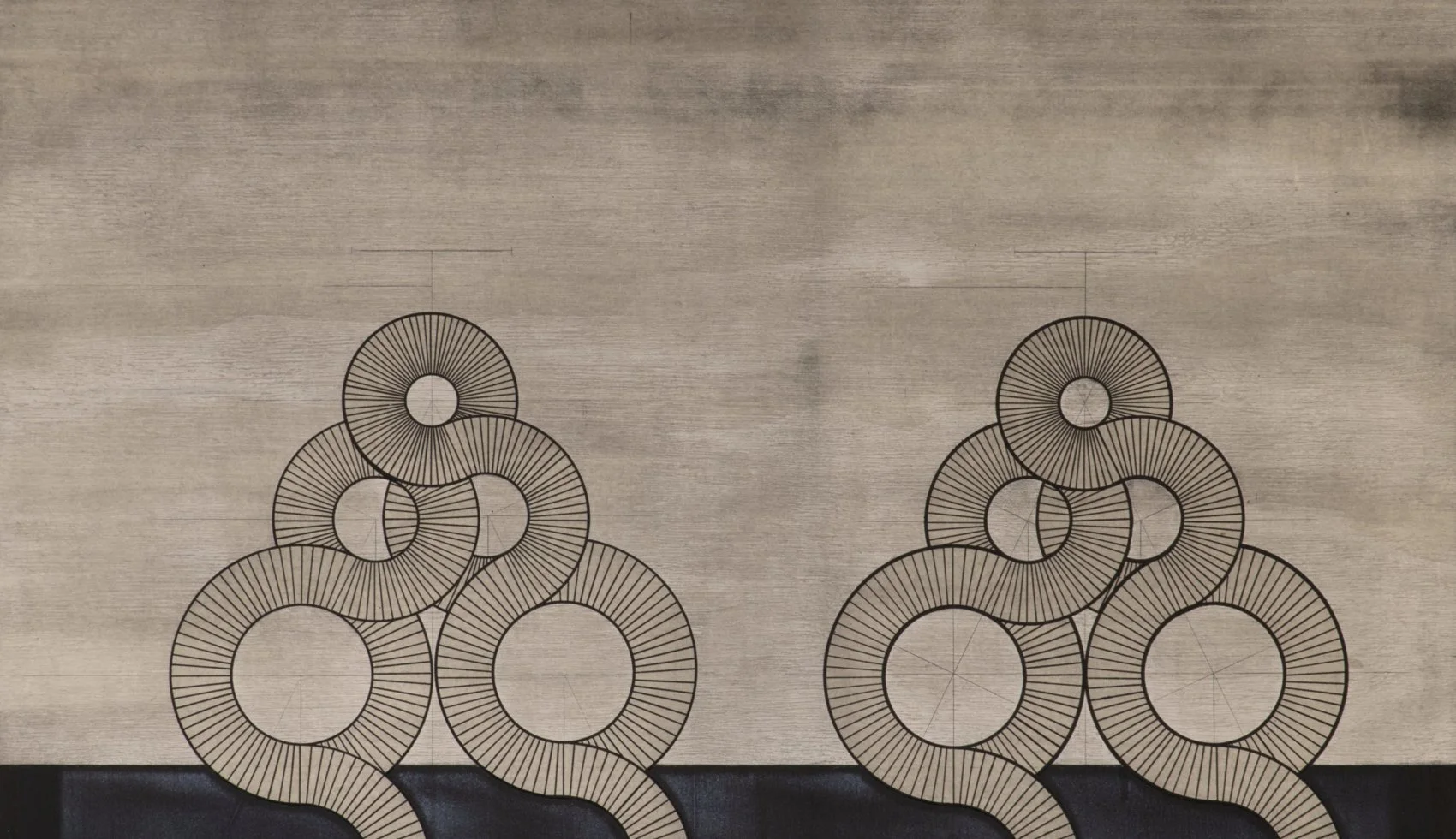
This body of work stems from an interest in the geometry of letterforms and design associated with typography. Through Print, my aim is to ponder and investigate the architectural sensibility of letterforms. In the graphic alphabetic system that we predominantly use in the West, the Latin alphabet, the baseline essentially functions as a horizon and letterforms generally sit atop the baseline as though they are bearing the weight of their own elements. Using this baseline/horizon line parallel as a point of departure, I speculate as to the relationship between ancient earthworks and megalithic monuments, their role as communicators in the landscape and if their sensibilities in any way informed the development of the plethora of lost or abandoned writing systems that collectively resulted in the letterforms that we use today.
Residual Assets (skipped steps)/ Andrea Pinheiro
May 14 - April 25
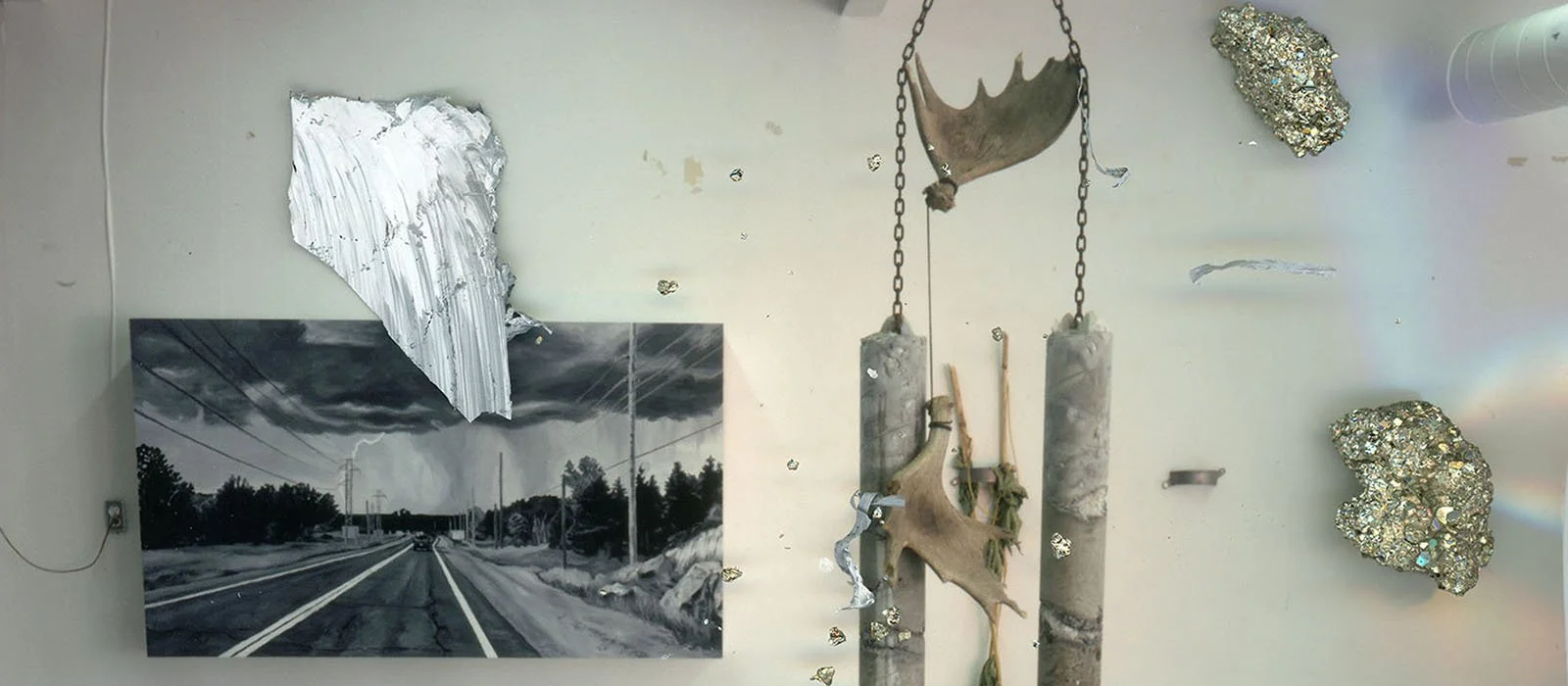
Residual Assets (skipped steps) is distilled from experience of place intertwined with consideration of the complex histories of land, objects, and materials. Referencing historical events, significant sites, and objects, the images and materials in Pinheiro’s work become vessels that record her interactions; gestures that oscillate between creative and destructive processes of transformation.
Incidental Folds / U fo A senior printmaking students and first year MFA candidates
May 21 -Jun 28
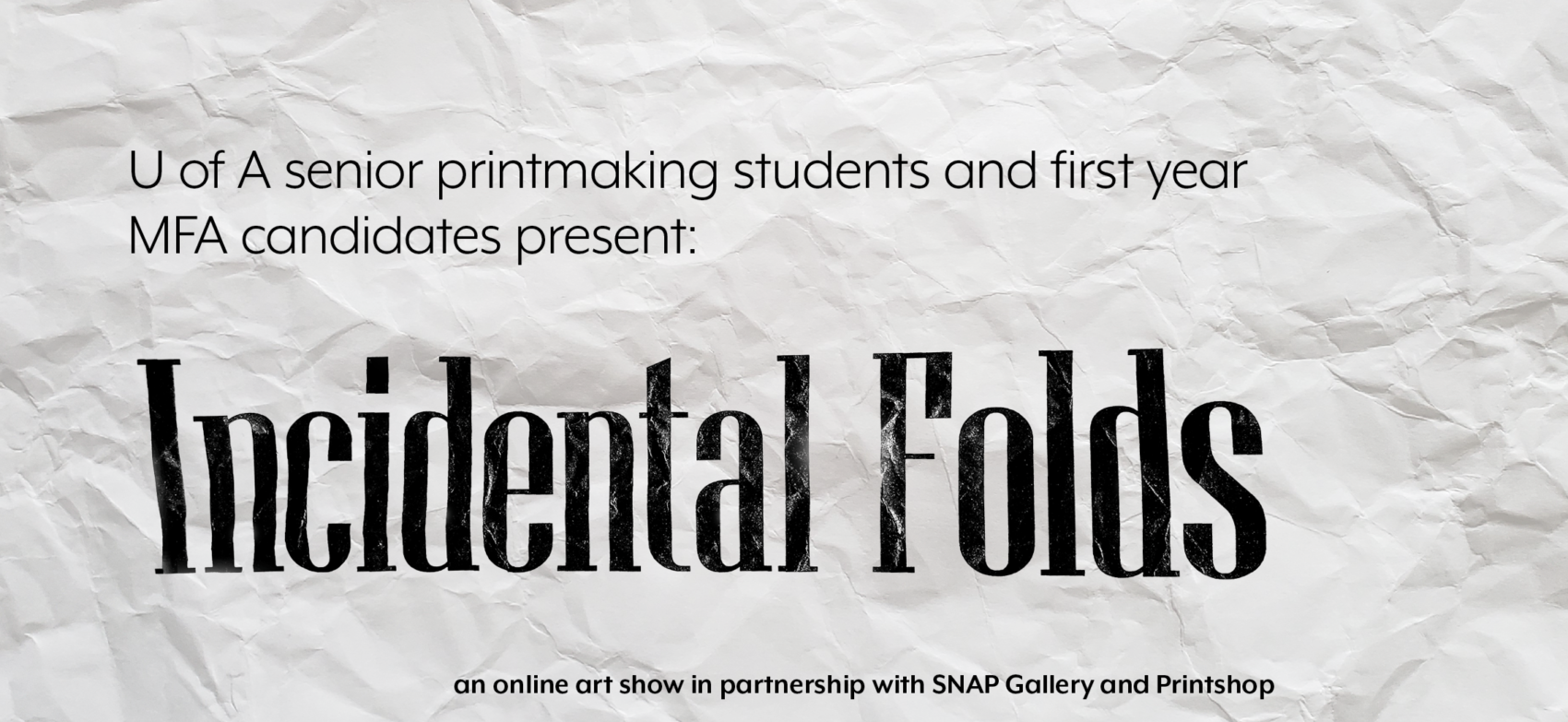
This exhibition celebrates the fruits of a year of self-directed studio and academic research by ten undergraduate senior level printmaking students, and three first-year graduate students in the Department of Art and Design, University of Alberta.
Incidental Folds features a range of printmaking media including collagraph, etching, silkscreen, lithography, as well mixed-media works. With their print projects and over a series of seminars students explored a wide range of themes including identity, body, home, mapping and place. Working closely together in the U of A print studios allowed them to discover productive linkages and folds within their practices which are celebrated in this exhibition.
Featuring works by: Alex Thompson, Anica Neiman, Callum McKenzie, Chelsey Campbell, Jasrin Dhatt, Jennifer Penkov, Kiona Ligtvoet, Marek Osedowski, Sara Corriveau, Stephanie Hayward,
Taiessa.
In Place | Print Exchange 2020 / Members Exchange
Jun 20 - Jul 18
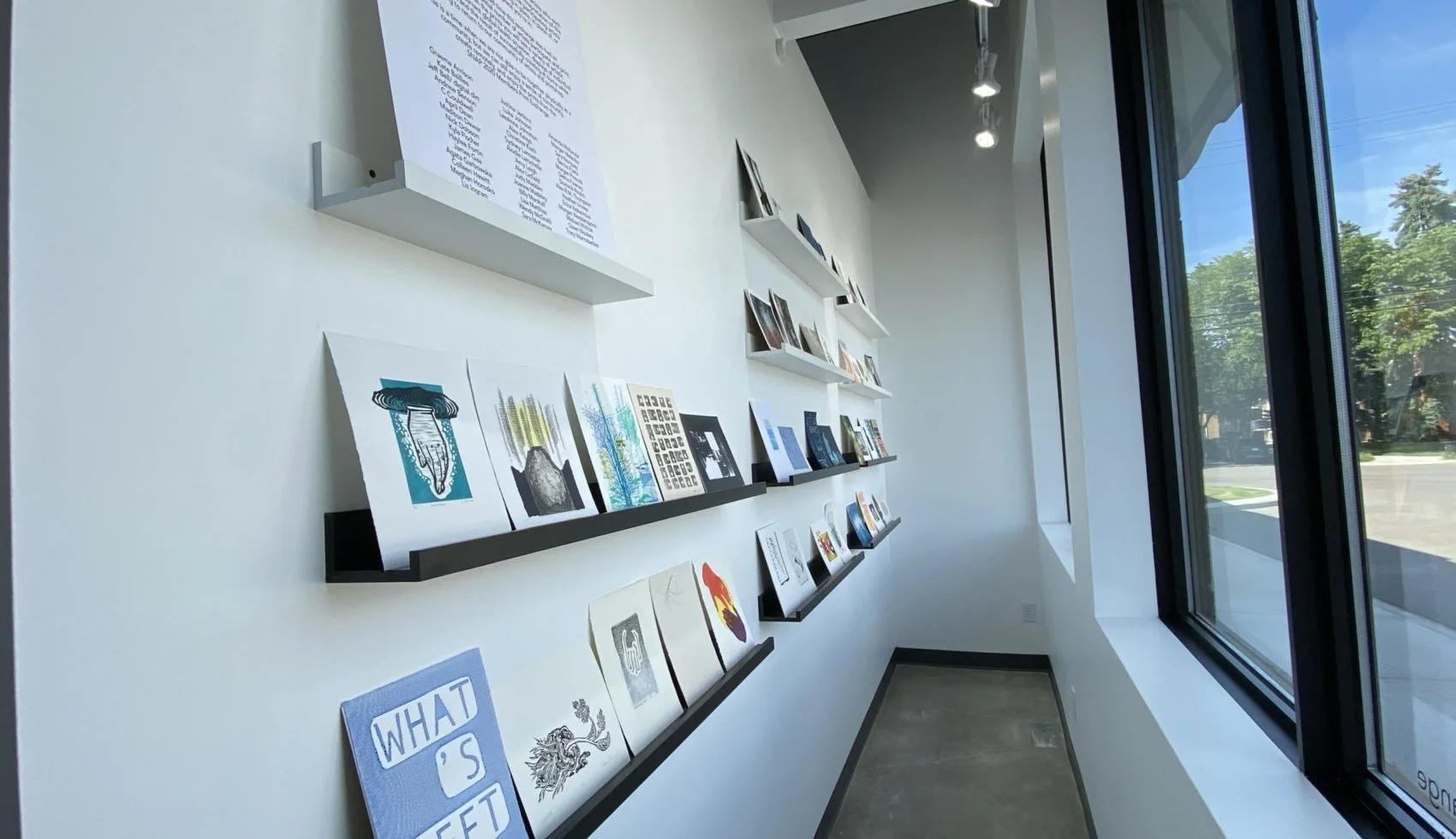
This year’s print exchange invited artists to engage with the ways that everyday life has been disrupted by the global pandemic, and to use this disruption to create small print editions at home. In Place had artists considering ideas of “staying in place,” “in place of,” or connecting to the place they’re in. This theme was interpreted broadly in response to the current global health situation, artists’ own experiences during this time, or the act of creating at home rather than sharing space with our community at SNAP Printshop. Artists have employed a wide range of printmaking methods such as relief/stamping, frottage, stencils/serigraphy, embossment, and more to create their editions of 6 in whatever at-home set-up they may have.
Participating artists:
Agata Garbowska, Alex Keays, Alex Linfield, Alex R.M. Thompson, Alodie Larochelle, Amanda McKenzie, Amy Leigh, Andrew Benson, April Dean, Bernie Paetz, Billy Marshall, C. Couldwell, Christine Koch, Colleen Hewitt, Dawn Woolsey, Deltra Powney, digital_dirt, Dominik Royko, Erica Vaskevicius, Graeme Arnison, Haylee Fortin, Heather Urness, James Gaa, Joanne Madeley, Judy Madden, Justine Jenkins, Kate Baillies, Kyla Fischer, LeeAnne Johnston, Lisa Matthias, Liz Ingram, Luke Johnson, Madison Dewar, Meghan Horosko, Michael Wichuk, Morgan Melenka, Morgan Pinnock, Morgan Wedderspoon, Nick Dobson, Sara McKarney, Sara Norquay, Sydney Lancaster, Tracy Wormsbecker, Wendy McGrath.
Synched / Jason Abma
Jun 20 - Jul 18
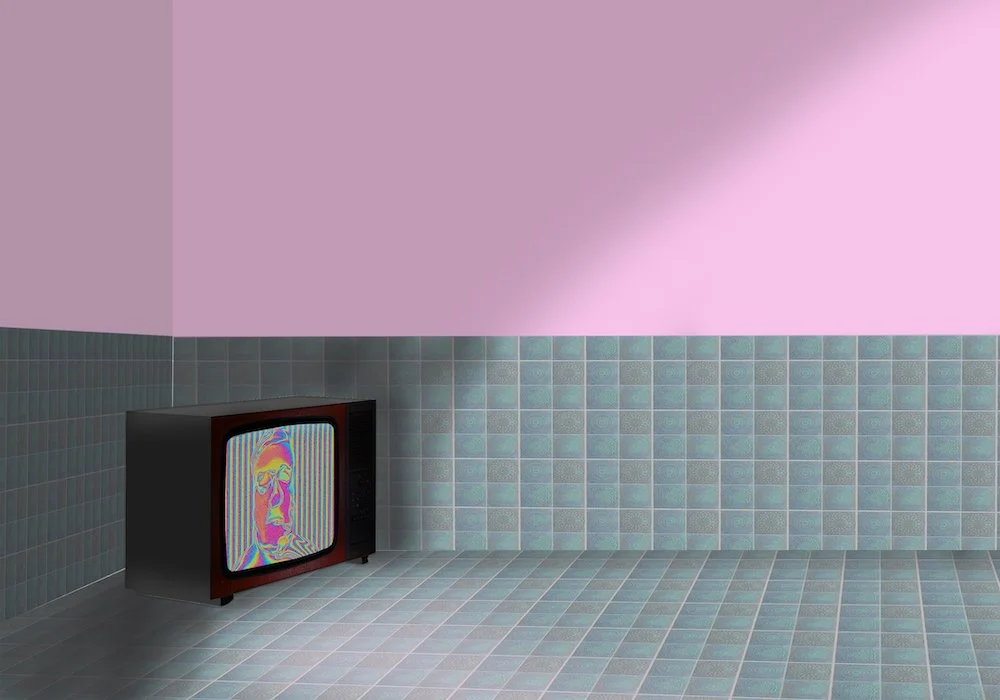
“D.I.S. Tech,” or the Digital Imprint Storage Technology company begins as harmlessly transcending these physical objects into the digital world. In this realm, no decay occurs; it is an immortal, timeless realm. Eventually at the turn of great profit in a dystopian future, riddled with over population and a lack of habitable space, D.I.S. Tech turns to biological tests, and finally human transcendence. Now humans can scan their bodies into an endless web of virtual reality as an escapist utopian dream. While their humanity rots in the decaying state of Earth, humans opt for a virtual world without mortality.
Thematically, my practice explores the strained relationship of mortality and humanity in my work. At a time when technological advances are slowly altering what it means to be alive, humans are choosing not to die. Unrest and division begins to haunt the real world, as well as the virtual. In any interconnected web, things will get caught that do not belong. This virtual pollution relays from hackers and rebels in the form of graffiti and garbage, riddling the perfect “nuclear family” idealism within D.I.S. Tech’s virtual world.
While this constructed world lives in the realm of science fiction, its principles hold true to the state of contemporary life. Humanity is caught in an immovable wave of technological advance, carrying with it a seeming need to “cure” the human condition and push beyond mortality. Is it possible to maintain humanity in an ever-growing fabricated world?”
Literary Leavings / Brianna Tosswill
Jul 25 - Aug 29
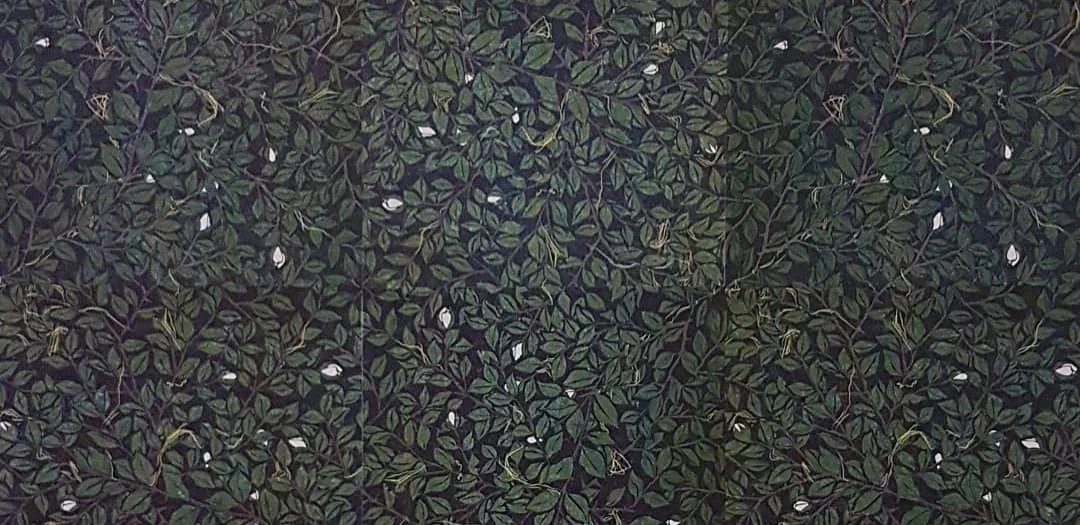
Through her book artist’s practice (Penrose Press) Brianna Tosswill navigates collaborative book-making, and stretches her viewers/readers’ notions of what a book looks, smells, and feels like, as well as how it can be read. She has created scrolls to eliminate page turning, editioned folklore with lipstick, folded mailable poetry into the most beautiful of envelopes, and is in the midst of designing a book meant to be drenched in the ocean.
In this window space, she lays out a narrative pattern complete with beginning, middle, and end. It bears little resemblance to a book, for all that it has a few hundred pages, a bunch of thread, and you can read it from left to right. As Tosswill reflects on past book projects—book problems—book solutions—she comes back to all the things that don’t make it into a finished work: from perfectly good extra pages, to APs, to ink tests and lino blocks.
Hold Me Dear / Hal Fortin
Jul 25 - Aug 29
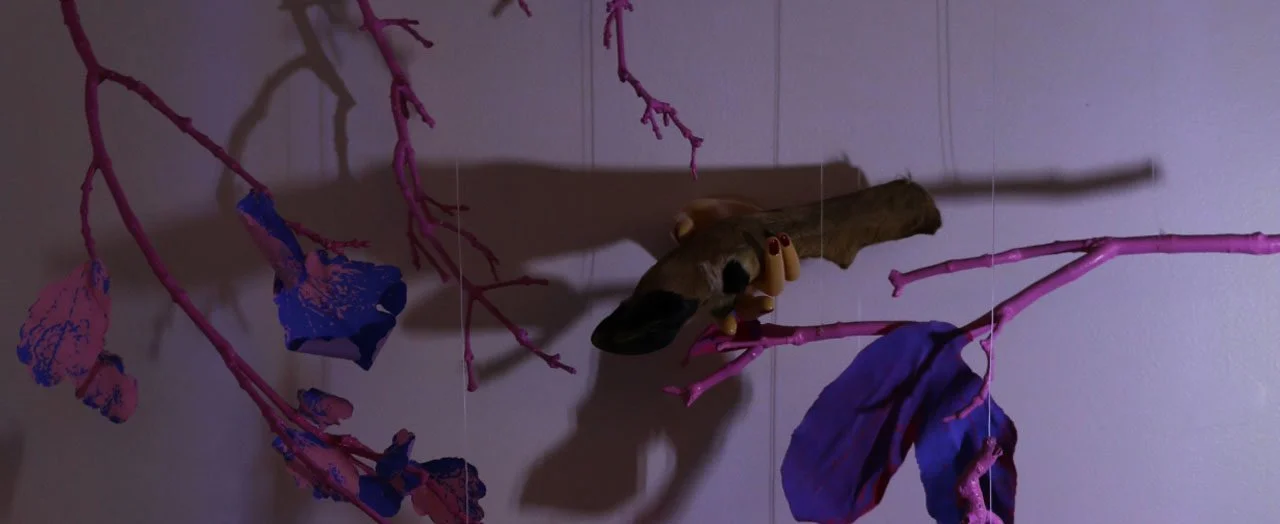
The prairies are my home, but at times I experience a disconnect with prairie culture. Despite coming from a rural farming family my politically left-leaning, city-slickin’ ways often leave me feeling like an imposter. As I collected images I noticed that many of the members had an interest in conservation, a willingness to provide support to other members and a respect for nature. Finding commonality with the hunting community was unexpected and challenged my assumptions about why people hunt. It had never occurred to me that hunting was anything beyond the desire to shoot something. While much of what we see online is curated by algorithms echoing what they have learned we like to look at, I had unknowingly chosen to integrate ideas and opinions I was uncomfortable with into my daily routine of checking social media.
MACROMAREAL (a rising tide lifts all boats) / Sydney Lancaster & Scott Smallwood
Sept 12 - Oct 10
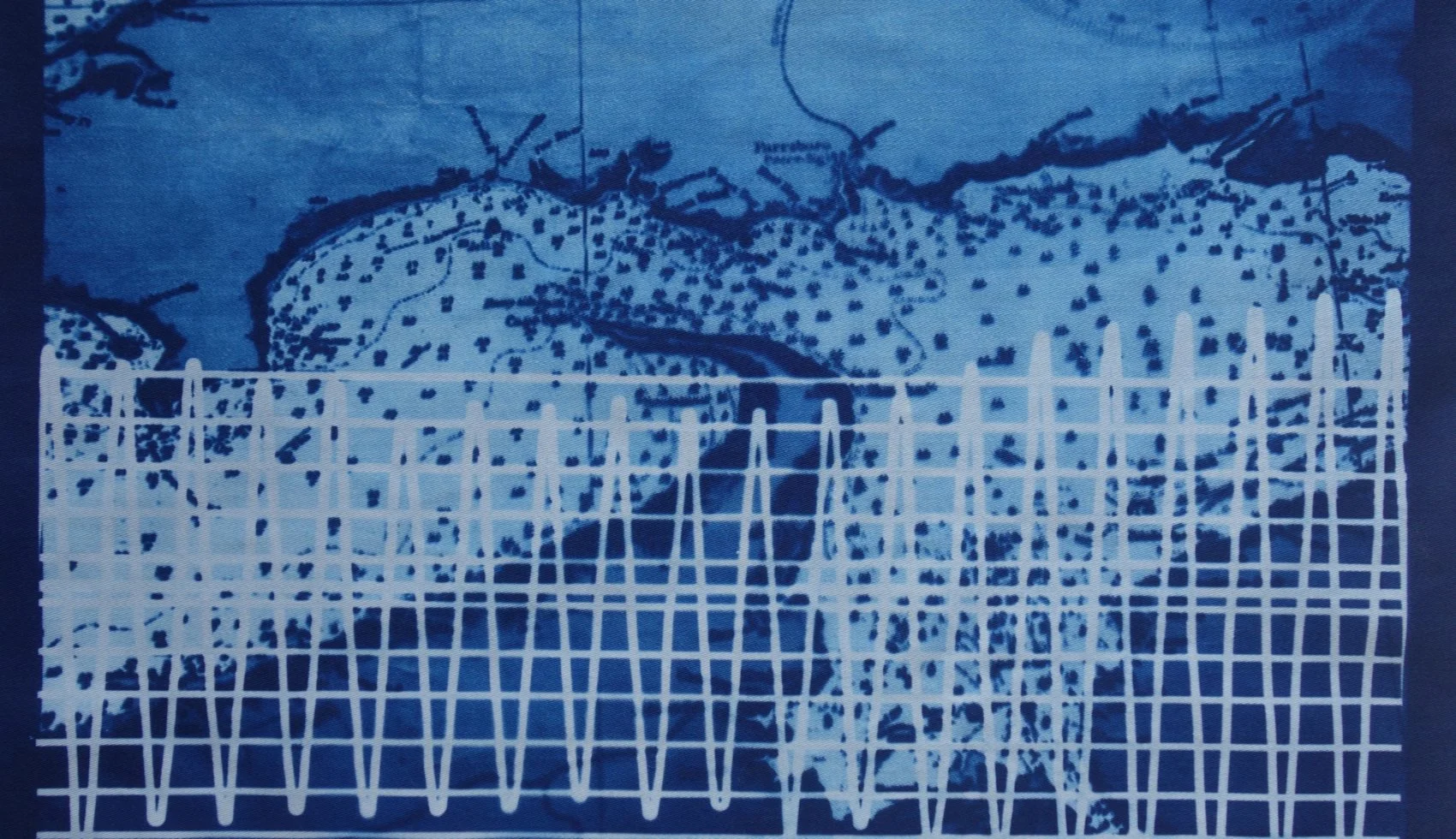
MACROMAREAL (a rising tide lifts all boats) approaches the tidal range of the Bay of Fundy and its documentation in tide tables and real data through a series of interrelated works that explore ways of understanding natural processes, and our relationship to those processes as perceived from different vantage points and through different scales of time. The history of human interaction with the Bay, including tide-related industries and oceanographic research in the Parrsboro area offered unique opportunities to create a body of work that explores the relationships between human actions, the coastal landscape, and tidal patterns and processes. Parrsboro’s proximity to the Fundy Geological Museum, the FORCE tidal power research station, the Ottawa House Museum, and Maritime Museum of the Atlantic presented further opportunities to investigate & incorporate both historical documents and current scientific research into our creative process. Moreover, the Bay and its tides also figure prominently in Mi’kmaw legend and story; this oral tradition situates geological history and processes firmly in the living memory of the Mi’kmaw.
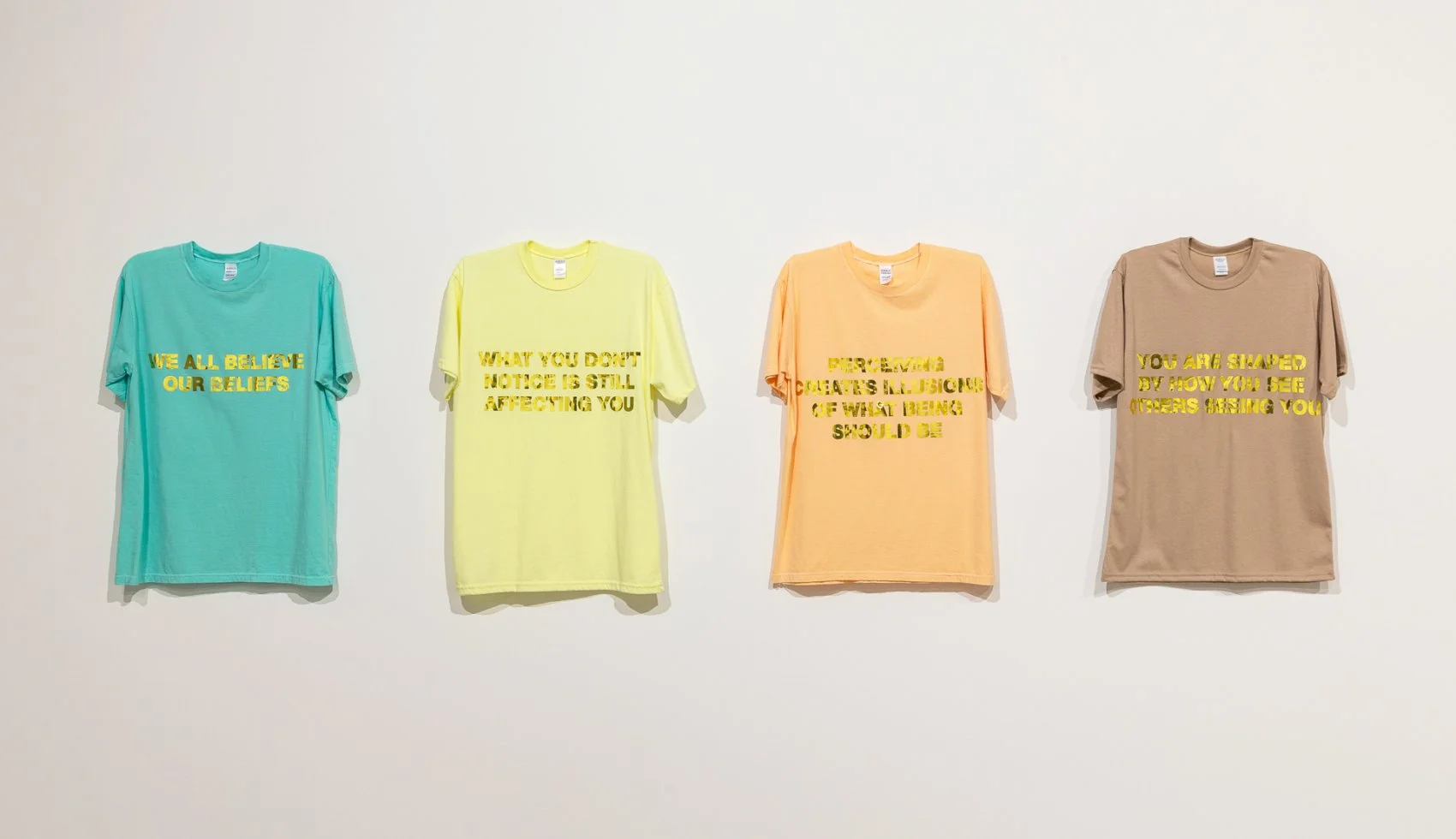
You see what you don’t see / St. Marie Walker
Oct 28 - Nov 21
You see what you don’t see explores beliefs that influence our perception of value. The work surveys how an environmental space contains assumptions that are embedded in the fabric of that built environment. Thus objects in our world take on ideological meaning, expressing a certain set of virtues that reinforce our preconceived sense of ‘who we are,’ forming a Cartesian Circle.
In this vein the work deconstructs and reconstructs familiar objects, environments, systems and semantics in order to reveal their prosthetic quality towards value. Namely the cognitive and socio-political significance produced by a particular object or space comes into view when the underlying presumption is altered. Qualities once thought to be inherent now can be understood as contingent. Philosopher Georg Simmel warned that, “The individual has become a mere cog in an enormous organization of things and powers which tear from his hands all progress, spirituality, and value in order to transform them from their subjective form into the form of a purely objective life…”
Our noble quest for objectivity has distorted our perceptions of value. This exhibition attempts to recalibrate known systems like environmental objects, consumerist identity, currency and dialogue, by blurring the lines between the concrete and the conceived. –St Marie φ Walker